Open source MPL-2.0Glassworks 0.4.4
The open core for Home Assistant wall panels
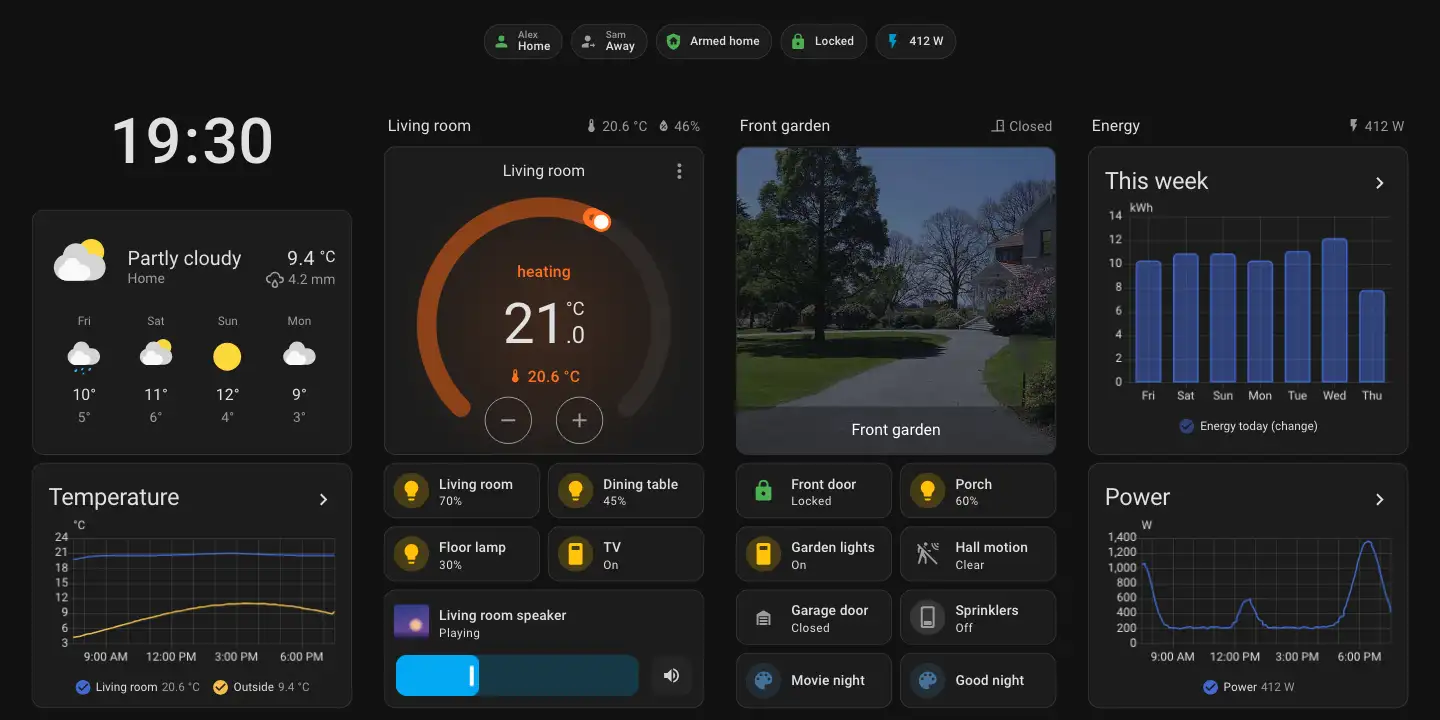
One open core handles the dashboard, ESPHome device, setup flow, and updates for any wall panel. Everything else plugs in as a pane—voice, synced music, Zigbee/Thread radios, or features you build yourself.
How it’s built
A frame holds panes, and Kiln installs it
Plugins. Each declares what hardware it needs.
- Assist
- Camera
- Diagnostics
- Sendspin
- Timers
- Bluetooth proxy
- Notifications
- Zigbee / Thread radio
- Frame-specific panes, like the S1 wall base
The stable contract between core and panes.
- entities()
- settings()
- setupSteps()
- overlays()
- requires ↔ provides
What every panel needs. No device code.
- GeckoView dashboard shell
- Setup flow
- ESPHome device and entity registry
- Screen policy
- Settings menu
- Updates through HA
One per device. Everything hardware-specific lives here.
- Board id
- Update installer
- Radio backend
- Presence and light sources
- Device extras, like relays
- Screen-off method
Any Android panel. Kiln installs over USB, from the browser.
- An Android SoC
- Zigbee / Thread radio (optional)
- Presence and light sensors
- Microphone and speaker
- Relays, wall base and other extras
The installer. Fires a stock device into a panel, over USB, from the browser.
- Connects over USB, in the browser
- Backs the device up first
- Roots it, where the frame needs root
- Flashes the frame and core
- Provisions Wi-Fi and Home Assistant
Supporting a new panel means writing a new frame. The Aqara S1 Plus is one, with the radio and wall-base panes.
Standalone MIT libraries
All library docs ›esphome-apiThe device side of the ESPHome native API, in Kotlin.API 0.1.1MITesphome-api-androidAndroid helpers for esphome-api: mDNS discovery.API 0.1.0MITimprovImprov Wi-Fi for Android, over BLE, serial or adb.API 0.1.0MITbluetooth-proxyAn ESPHome Bluetooth proxy on Android.MITsendspinA Sendspin synced-audio player for Android.MITvoiceWake words and Home Assistant Assist on Android.MITimprov-serialImprov Wi-Fi Serial for the browser, and over adb.MITha-authHome Assistant sign-in and tokens.MITsendspin-protocolThe Sendspin synced-audio protocol.MITfastbootFastboot over WebUSB, for every frame Kiln installs.MITframe-cardThe frame card and 3D renderer, for Kiln and the site.MITWhy MPL-2.0
Glassworks stays open while your product stays yours.Port itWrite a frame for any Android wall panel, smart mirror, or tablet.
Ship your own hardwareBundle Glassworks on hardware you sell. Your custom frames and panes can stay closed.
Share core fixes backImprovements to Glassworks core files stay open so every supported device gets better.